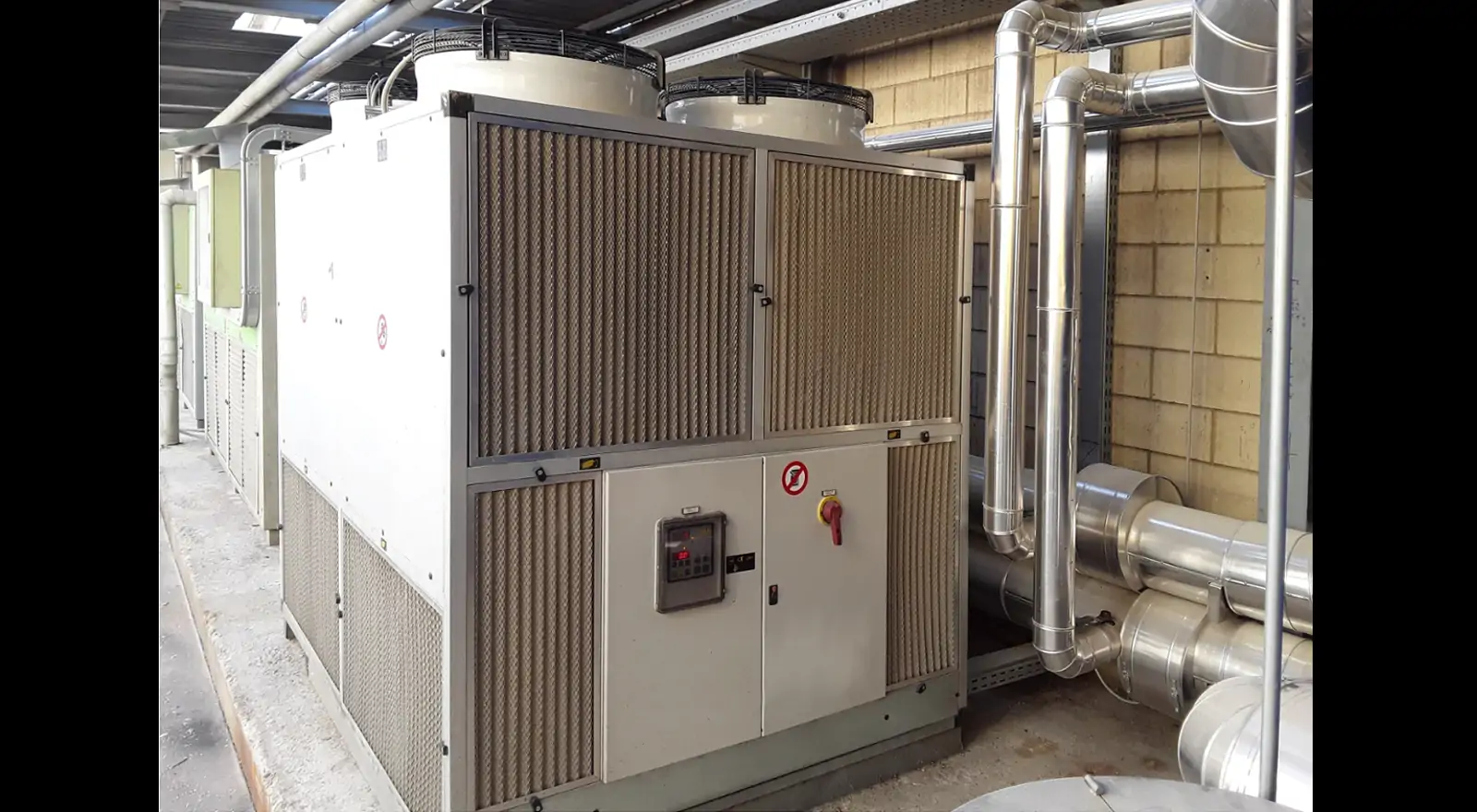
When a cooling system works properly, most people never think about it. That’s probably the highest compliment a chiller can get.
But when temperatures start creeping upward, equipment begins making unfamiliar noises, or a production area can’t stay within its required temperature range, suddenly everybody notices. For businesses in Oklahoma, where summer heat can be intense and unpredictable, dependable cooling isn’t something to take for granted.
Commercial buildings, food operations, manufacturing facilities and other industrial sites often depend on complex cooling equipment every day. A chiller may be running quietly somewhere behind the scenes, but its performance can affect employee comfort, product quality, equipment life and operating costs.
The tricky part is that cooling problems don’t always begin with a dramatic failure. More often, there’s a gradual decline. The system runs longer. Energy bills rise. Temperatures become inconsistent. A strange vibration appears and then, eventually, the system refuses to cooperate.
Knowing what to watch for can save a business from an unnecessarily expensive surprise.
Oklahoma Weather Puts Cooling Equipment to the Test
Oklahoma’s climate can be hard on mechanical systems. Hot summer temperatures mean cooling equipment may run for long stretches with very little downtime.
That constant workload creates wear.
A system that isn’t maintained properly may struggle to remove heat efficiently. Dirty coils, restricted airflow, worn components or control issues can all affect performance. And when equipment is already working hard because of outdoor temperatures, a relatively small problem can become much more noticeable.
This is one reason businesses shouldn’t wait for complete failure before arranging an inspection.
Why Chiller Performance Matters
A chiller isn’t simply another air-conditioning component. In many commercial and industrial environments, it plays a central role in removing heat and maintaining controlled temperatures.
If the system loses efficiency, the consequences can spread.
Employees may become uncomfortable. Certain areas may develop temperature fluctuations. Production equipment could operate outside its preferred conditions. And higher energy consumption can quietly increase monthly operating costs.
For businesses looking for chiller services in Oklahoma, the right provider should be able to assess the equipment as a complete system rather than simply replacing whichever component happens to fail first.
Good diagnosis matters. So does experience with the type and size of chiller being serviced.
Watch for Early Warning Signs
Your equipment may tell you something is wrong before it actually breaks.
Longer operating cycles are one possible clue. So are unusual sounds, unexpected vibrations or inconsistent temperatures.
An unexplained increase in energy use can also be worth investigating. It doesn’t automatically mean the chiller is failing, of course. Weather, occupancy and operating schedules can all affect energy consumption.
Still, when several changes appear at the same time, it’s sensible to have a professional take a look.
The goal isn’t to panic over every little noise. It’s to notice when something has changed from normal.
Commercial Refrigeration Has Different Demands
Restaurants, supermarkets, food distributors and other businesses have their own cooling challenges.
Commercial refrigeration equipment may operate almost continuously, particularly in busy food-service environments. Walk-in coolers, freezers, display cases and prep refrigerators all need consistent performance.
A small temperature problem can become a serious inventory problem if it’s ignored.
Door seals, condenser coils, fans and temperature controls all deserve attention. Staff should also avoid blocking vents or packing storage areas so tightly that air cannot circulate properly.
The everyday habits of employees can have a surprising impact on refrigeration performance.
Industrial Facilities Need More Than Basic Cooling
In manufacturing and processing environments, cooling requirements can become considerably more specialized.
Certain industrial processes generate large amounts of heat and may require controlled temperatures to keep equipment operating correctly. In these settings, an HVAC or chiller problem can affect production rather than simply making a building uncomfortable.
That raises the stakes.
Downtime can mean missed production targets, delayed orders and additional labor costs. For some businesses, even a relatively short interruption can have a noticeable financial impact.
That’s why industrial cooling systems should be approached with careful planning rather than emergency repairs alone.
Maintenance Is Less Exciting, But More Predictable
Nobody gets particularly excited about scheduling maintenance.
There’s no dramatic before-and-after moment. The equipment just keeps working.
And that’s exactly the point.
Routine maintenance can help technicians identify dirty coils, worn belts, electrical issues, refrigerant-related concerns and other developing problems. It also creates an opportunity to evaluate system performance before peak cooling demand arrives.
Businesses can then plan repairs around their schedules instead of dealing with a sudden failure in the middle of a busy period.
For equipment that represents a significant investment, that predictability has real value.
Efficiency Isn’t Just About the Equipment
Buying an efficient chiller doesn’t guarantee low operating costs.
Installation quality, maintenance, building conditions and operating practices all matter.
For example, a system may be technically efficient but still consume excessive energy if coils are dirty or airflow is restricted. Poor insulation or unnecessary heat entering a cooled space can also increase the workload.
Regular monitoring can help identify these issues.
Businesses should look at energy consumption over time rather than focusing on one unusually high bill. Patterns are often more informative than isolated numbers.
Repair or Replacement?
Eventually, every mechanical system reaches a point where replacement becomes worth considering.
But deciding when that point has arrived isn’t always straightforward.
An older chiller with repeated failures and rising operating costs may be difficult to justify repairing indefinitely. On the other hand, a system with plenty of useful life left may only need a relatively minor component replaced.
Consider the repair cost, equipment age, maintenance history, energy efficiency and expected remaining lifespan.
A good service professional should explain those factors and let the business make an informed decision. You don’t necessarily need the newest system. You need the system that makes financial and operational sense.
Choosing a Chiller Service Provider
The contractor you choose matters almost as much as the equipment itself.
Look for technicians with experience working on commercial and industrial systems similar to yours. Ask about qualifications, maintenance programs, emergency support and warranties.
Communication is another big one.
Can they explain the problem without drowning you in technical jargon? Do they provide clear estimates? Do they tell you when a repair is necessary and when it’s optional?
Those details build trust.
It’s also worth asking whether the company keeps service records. Knowing what was repaired or inspected previously can make future troubleshooting faster and more accurate.
Don’t Wait for the Hottest Day
There is a predictable pattern in cooling service: problems seem to appear when demand is highest.
That’s not always bad luck. Equipment that has been struggling quietly for months may finally reach its limit when outdoor temperatures climb.
Scheduling an inspection before peak cooling season can uncover issues while there is still time to address them.
It also gives businesses a chance to budget for larger repairs or replacement rather than making a rushed decision during an emergency.
A Little Planning Goes a Long Way
Cooling systems aren’t usually the first thing business owners think about when planning for the future. There are customers, employees, inventory, payroll and a hundred other things competing for attention.
Still, reliable cooling supports all of those things.
Whether a facility needs temperature control for people, products or equipment, the basic principle is the same: don’t wait until failure forces the conversation.
Pay attention to warning signs. Keep equipment clean and accessible. Schedule appropriate maintenance. Work with professionals who understand the system you’re operating.
No chiller lasts forever, and no maintenance plan can prevent every possible breakdown. But thoughtful care can reduce avoidable failures, improve efficiency and give businesses more control over their operating costs.
In Oklahoma’s demanding climate, that’s not just good maintenance.
It’s good business.