Water treatment equipment is easy to overlook when it’s doing its job. You turn on the tap, enjoy better-tasting water, and carry on with your day. But even dependable systems don’t last forever. Filters become less effective, components wear out, and older equipment may no longer match your household’s changing needs. At some point, repair may not be the only option worth considering.
Updating a water treatment setup can improve convenience, efficiency, and water quality. For some homeowners, that means replacing outdated equipment. For others, it may involve using a local water fill-up station or arranging professional service to keep an existing system working properly. The right choice depends on the condition of the equipment, the quality of the incoming water, and the needs of the household.
Knowing When Your Water Treatment System Is Outdated
Water treatment systems are built to last, but their performance can gradually decline. A softener that once handled household demand easily may struggle after a family grows or water usage increases. A filtration unit may also become less effective if its media is exhausted or if the water chemistry changes.
Some warning signs are easy to notice. You might see hard water spots returning on dishes, detect an unusual taste or odor, or notice that soap no longer lathers as it once did. Reduced water pressure, frequent service problems, leaks, and rising maintenance costs are other reasons to take a closer look.
Age alone doesn’t always mean a system must be replaced. However, if an older unit requires frequent repairs or uses outdated technology, replacing it may be more practical than continuing to invest in it. A professional evaluation can help determine whether a repair, component replacement, or complete upgrade makes the most sense.
What Are System Trade-Ins and Upgrades?
For homeowners considering new equipment, system trade-ins & upgrades can make the transition easier. A trade-in program may allow an existing water softener, filter, or treatment unit to be replaced with a newer model while potentially reducing the upfront cost. The exact terms depend on the provider, the type of equipment, and its condition.
An upgrade does not always mean choosing the largest or most advanced system available. It should mean selecting equipment that better fits the home’s actual water needs. For example, a household dealing mainly with hard water may need a more efficient softener, while a home experiencing chlorine taste may benefit from improved carbon filtration.
In other situations, the water problem may have changed. A homeowner who originally installed a softener might later discover concerns involving iron, sulfur, sediment, or microorganisms. Adding a specialized filter or combining several treatment stages could provide more complete coverage than simply replacing the original unit with a similar model.
Before agreeing to a trade-in, ask how the old equipment will be evaluated, whether removal is included, what warranty comes with the new system, and whether installation costs are separate. Clear answers can prevent surprises later.
The Benefits of a Water Fill-Up Station
Not every household needs to install a complete treatment system immediately. Some people live in apartments, rent their homes, travel frequently, or simply want access to treated drinking water without committing to new equipment. In these situations, a water fill-up station can be a convenient option.
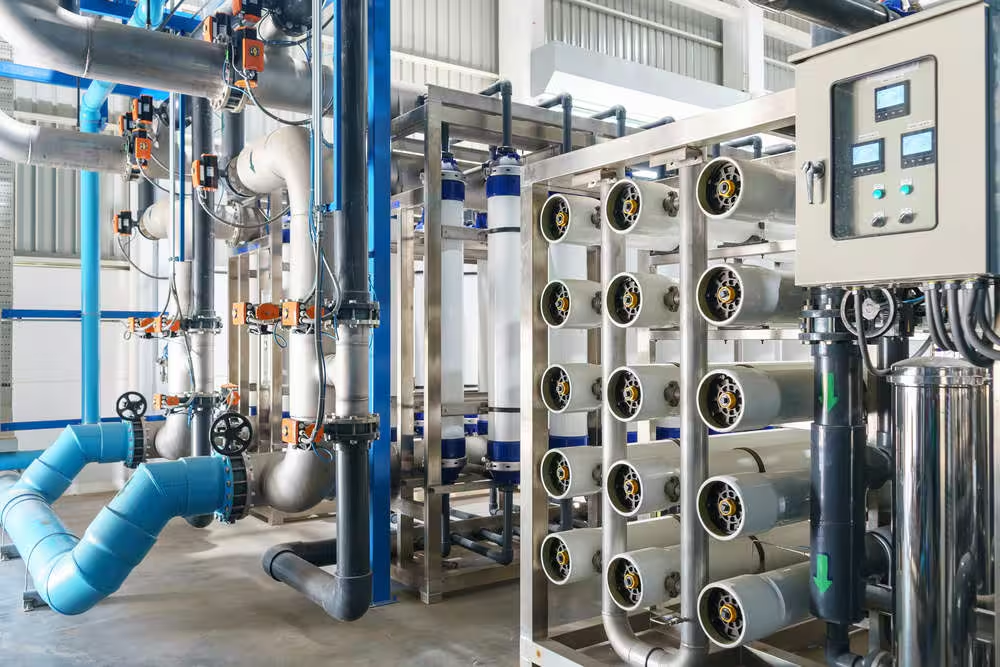
Water fill-up stations allow customers to bring reusable containers and refill them with treated or purified water. Depending on the facility, the water may pass through several treatment stages, such as sediment filtration, carbon filtration, softening, reverse osmosis, or ultraviolet disinfection.
This can be useful for drinking, cooking, preparing beverages, and filling larger containers for home use. It may also reduce reliance on single-use plastic bottles, especially for households that regularly purchase bottled water.
Still, customers should pay attention to cleanliness and maintenance. A reputable fill-up station should have clear sanitation practices, regularly serviced equipment, and properly maintained dispensing areas. Containers should also be clean and suitable for storing drinking water. Even high-quality treated water can become contaminated if it is handled or stored improperly.
Why Professional Water Care Still Matters
Water treatment equipment can appear straightforward from the outside, but the internal components and water chemistry are often more complicated than they seem. A system may be installed correctly yet perform poorly because it is undersized, incorrectly programmed, or exposed to water conditions it was not designed to handle.
This is where expert care becomes valuable. A trained water treatment professional can assess the water, inspect existing equipment, identify performance problems, and recommend solutions based on actual conditions. Instead of simply selling a replacement, a knowledgeable technician should explain why a particular system is appropriate.
Professional care may include water testing, filter replacement, tank inspection, valve checks, system cleaning, pressure testing, and adjustments to regeneration settings. It can also help identify issues outside the treatment system, such as plumbing corrosion, water heater problems, or changes in the incoming supply.
For complex concerns—especially those involving iron, sulfur, bacteria, nitrates, or persistent odors—professional evaluation is often more reliable than trying several products at random.
Comparing Repair, Replacement, and Upgrade Options
When a water treatment system begins to struggle, homeowners generally have three choices: repair the existing unit, replace it with a similar model, or upgrade to a more suitable system.
Repair may be the best fit when the equipment is relatively new and the issue is limited to a worn valve, clogged filter, faulty sensor, or damaged connection. Replacement may be more sensible when the system is old, inefficient, or repeatedly breaking down.
An upgrade becomes worth considering when household needs have changed or when the original system never fully addressed the water problem. For example, a basic softener may reduce hardness but do nothing for sulfur odor or sediment. A multi-stage system could be more appropriate if testing identifies several concerns.
Cost matters, but it shouldn’t be the only factor. Consider operating expenses, replacement media, electricity use, salt consumption, maintenance requirements, warranty coverage, and expected service life. A cheaper unit may cost more over time if it needs frequent attention or fails to deliver consistent results.
Making a Smart Long-Term Plan
Before making a decision, start by identifying what is actually wrong with the water. Changes in taste, smell, color, or pressure should be investigated rather than treated with assumptions. Testing can help determine whether the issue involves minerals, sediment, disinfectants, microorganisms, or plumbing conditions.
Next, review the current system’s age, maintenance history, and performance. If the unit has been neglected, a professional service visit may restore its function. If it is outdated or no longer suitable, ask about replacement and trade-in possibilities.
For drinking water needs, a fill-up station may provide a useful short-term or ongoing option. For whole-home concerns, a properly selected treatment system may offer greater convenience and broader protection.
A Fresh Start for Better Water
Water treatment is not simply about buying equipment and forgetting about it. It involves making thoughtful decisions as water conditions, technology, and household needs change. Sometimes maintenance is enough. Sometimes a trade-in or upgrade is the more practical route. And in certain situations, a well-maintained water fill-up station can offer a simple way to access treated drinking water.
The most important step is to avoid guessing. Test the water, understand the condition of your equipment, and seek knowledgeable guidance when the problem is complex. With the right combination of reliable technology and ongoing care, cleaner, better-tasting water can remain a dependable part of everyday life.